
Useful Info
Signing a CPCV in Portugal Isn't Enough
17/05/26By Francisco Gonçalves
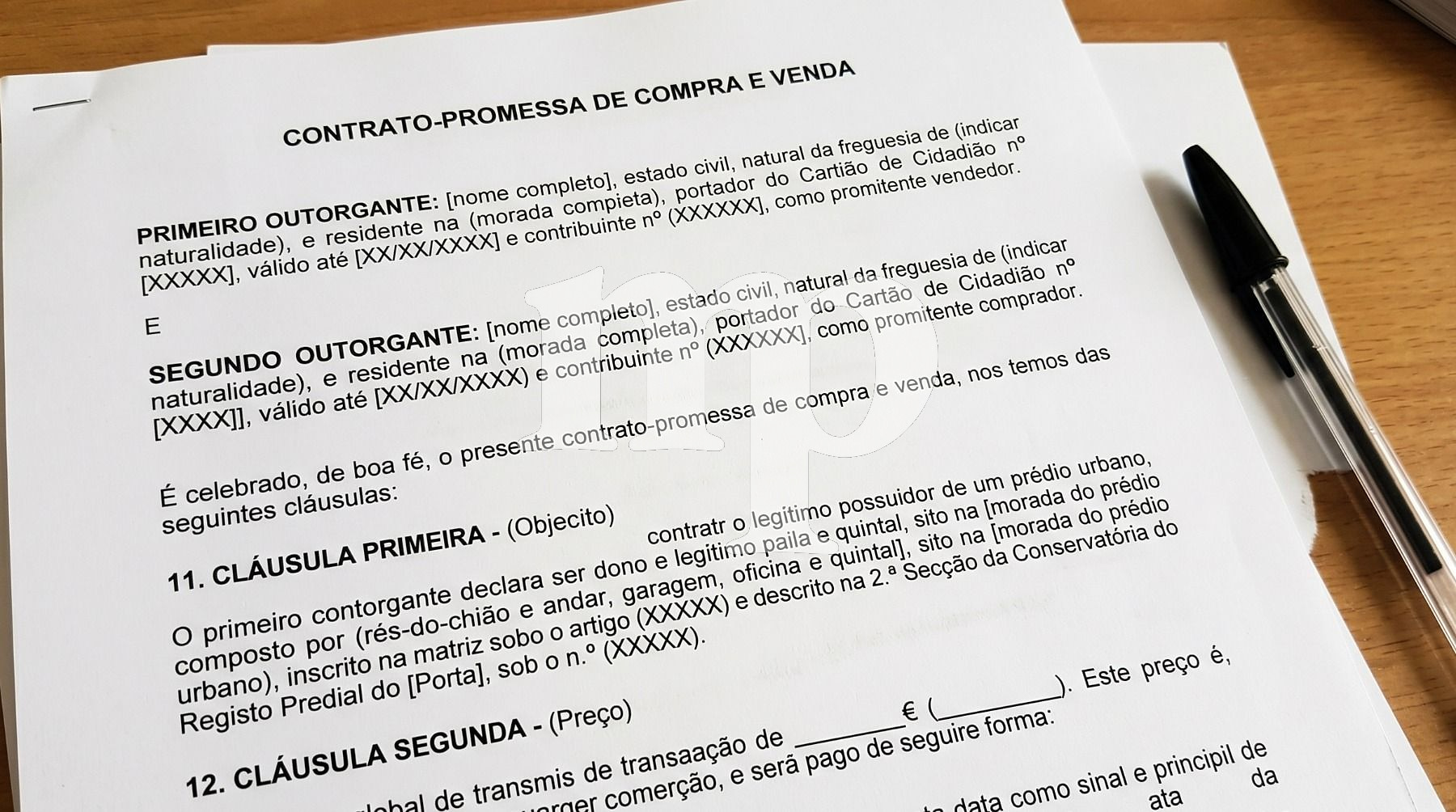
Don't lose your deposit when buying property in Portugal. Learn the hidden risks of the promissory contract (CPCV) and how the Provisional Registry protects your money.
Essential Guide: What is a CPCV and what precautions should you take in Portugal?
Buying a house in Portugal is a very important step that almost always requires the execution of a preparatory contract: the CPCV.
What is a CPCV?
The Promissory Contract of Purchase and Sale (CPCV) is a legally binding agreement established between the sellers and the buyers of a property. This document allows the reservation of the property through the payment of an initial amount (the deposit, known as sinal).
This reservation becomes effective because the deposit is protected by the contract's clauses, ensuring that both parties face a penalty if they unjustifiably fail to complete the agreement (as a general rule, if the buyer backs out, they lose the deposit; if the seller backs out, they must return it in double). The CPCV can and should include several safeguard clauses, such as the return of the deposit in full (in single) if the buyer's bank loan is rejected.
The main goal of the CPCV is to secure the deal and minimize the probability of another buyer taking the property in question during the preparation and scheduling of the final public deed (escritura).
Although it is a powerful instrument that simplifies and adds security to the buying process, the contract alone is often not enough. We leave you with a list of essential precautions and "check-ups" to consider before signing a promissory contract in Portugal:
Checklist of Precautions When Signing a CPCV
1. Signature Authentication
Signatures should always be authenticated in person by a lawyer, solicitor, or notary. When signing a CPCV in Portugal, you must be absolutely sure that the identity of all parties has been legally confirmed. Later on, if the seller fails to fulfill their part and legal action is necessary, you will not want any room for doubt regarding the validity of the signatures.
2. Make the Provisional Registration of Acquisition (Worth every penny!)
Let's be completely honest: costing around 200€ to 250€, this is the best money spent in the entire process. It is a negligible amount compared to the price of a house and buys you tremendous legal security. If you only have a CPCV in your drawer and wait months for the deed, you are exposed to three major risks that the contract alone cannot stop:
• Surprise Attachments/Liens: Imagine the seller has debts to the Tax Authority, Social Security, or a bank. If, during the time you wait for the deed, the property is attached by these creditors, the attachment is registered before your purchase. Having a signed CPCV does not prevent the State or the bank from seizing the house.
• Sales to Third Parties (Scams): A bad-faith seller can sign a CPCV with you today, receive your deposit, and tomorrow go and sign the deed for the same property with someone else. Since that person signed the deed and registered it, the house becomes theirs. Your CPCV does not cancel that sale.
• Insolvency or Death of the Seller: If the seller is declared insolvent or dies before the deed, the property may enter the insolvency estate or go to the heirs.
How the Provisional Registration solves this: By making this registration, the Land Registry places a public note on the property's certificate warning that the house is promised to you. The magic of this registration is that it "freezes" your priority. When you do the final deed, the legal effects of the purchase go back in time to the date you made the Provisional Registration, protecting you from anything that might have happened in between.
3. Confirm Property Ownership
Make sure that all parties who own the property (owners and their respective spouses, if applicable) are listed on the Property Certificate (Certidão de Teor), are identified in the CPCV, and sign the document. If you use signature authentication (point 1), the responsible professional will help safeguard this aspect.
4. Transparency in Bank Accounts
Verify that both bank accounts (the origin IBAN from which you transfer the deposit and the destination IBAN that receives it) are expressly stated in the text of the promissory contract. This creates a bulletproof documentary trail proving that you have fulfilled your financial obligations.
5. Express Waiver of "Specific Performance" (Execução Específica)
As recommended by many lawyers, you should consider including a clause that expressly waives the specific performance regime (Article 830 of the Portuguese Civil Code). By waiving this legal path, you ensure that, if a serious unforeseen event occurs in your life and you cannot proceed with the deed, your maximum risk will be "only" the loss of the deposit. This avoids being dragged into lengthy court processes where you could be forced to buy a property you can no longer afford.
6. Financing Approval Clause
If you are using a mortgage, it is mandatory to include a suspensive condition stating that the contract is only valid if the bank approves the credit. This way, if the bank refuses the loan, your deposit is fully refunded and you do not lose your money.
7. Deadlines and Grace Period Clause
The CPCV must have a clear deadline for the deed to take place (e.g., 90 days). However, include a "grace period clause" (cláusula de tolerância - e.g., 30 additional days) to prevent potential bureaucratic delays from banks or registries that are not the fault of either party.
8. Declaration of No Debt to the Condominium
If it is an autonomous fraction (apartment), oblige the seller in the CPCV to present, on the day of the deed, a declaration from the condominium administrator proving that the property has all quotas and expenses up to date, so you do not inherit past debts.
9. Identification and Verification of Legal Documentation
A property is not just made of walls, but also of legality. The CPCV text must unequivocally identify the numbers, issue dates, and issuing entities of all the mandatory documentation of the property, ensuring everything is in order. Confirm that the contract mentions:
• Use License (Licença de Utilização) or exemption: Although the recent Urban Simplex dispensed with its mandatory presentation at the time of the deed, the responsibility to sell a legalized property remains with the seller. The CPCV must reference the use permit and include a declaration from the seller attesting that no illegal works were carried out.
• Energy Certificate: Its issuance is mandatory for marketing. The contract must expressly indicate the assigned energy class and the certificate's registration number.
• Urban Building Booklet (Caderneta Predial Urbana) and Permanent Certificate (Certidão Permanente): These must be referenced to ensure that the areas registered for tax purposes and at the Land Registry exactly match the physical reality of the house.
• Housing Technical File (Ficha Técnica da Habitação - FTH): A mandatory document to be included in the process if the property's use license was issued after March 30, 2004.
10. Detailed Inventory of Furniture and Equipment (The Contents)
If it is agreed that the property is sold with contents (whether the complete furniture, just some pieces, or the kitchen appliances), this should never be left just "as a verbal agreement". The CPCV must include a specific clause or, ideally, a descriptive annex with the complete inventory of everything that stays in the house. If possible, detail brands, models, and the condition of heavy equipment. Otherwise, you risk receiving the keys and finding the house completely empty, with no legal basis to complain.
Buying a house in Portugal is a very important step that almost always requires the execution of a preparatory contract: the CPCV.
What is a CPCV?
The Promissory Contract of Purchase and Sale (CPCV) is a legally binding agreement established between the sellers and the buyers of a property. This document allows the reservation of the property through the payment of an initial amount (the deposit, known as sinal).
This reservation becomes effective because the deposit is protected by the contract's clauses, ensuring that both parties face a penalty if they unjustifiably fail to complete the agreement (as a general rule, if the buyer backs out, they lose the deposit; if the seller backs out, they must return it in double). The CPCV can and should include several safeguard clauses, such as the return of the deposit in full (in single) if the buyer's bank loan is rejected.
The main goal of the CPCV is to secure the deal and minimize the probability of another buyer taking the property in question during the preparation and scheduling of the final public deed (escritura).
Although it is a powerful instrument that simplifies and adds security to the buying process, the contract alone is often not enough. We leave you with a list of essential precautions and "check-ups" to consider before signing a promissory contract in Portugal:
Checklist of Precautions When Signing a CPCV
1. Signature Authentication
Signatures should always be authenticated in person by a lawyer, solicitor, or notary. When signing a CPCV in Portugal, you must be absolutely sure that the identity of all parties has been legally confirmed. Later on, if the seller fails to fulfill their part and legal action is necessary, you will not want any room for doubt regarding the validity of the signatures.
2. Make the Provisional Registration of Acquisition (Worth every penny!)
Let's be completely honest: costing around 200€ to 250€, this is the best money spent in the entire process. It is a negligible amount compared to the price of a house and buys you tremendous legal security. If you only have a CPCV in your drawer and wait months for the deed, you are exposed to three major risks that the contract alone cannot stop:
• Surprise Attachments/Liens: Imagine the seller has debts to the Tax Authority, Social Security, or a bank. If, during the time you wait for the deed, the property is attached by these creditors, the attachment is registered before your purchase. Having a signed CPCV does not prevent the State or the bank from seizing the house.
• Sales to Third Parties (Scams): A bad-faith seller can sign a CPCV with you today, receive your deposit, and tomorrow go and sign the deed for the same property with someone else. Since that person signed the deed and registered it, the house becomes theirs. Your CPCV does not cancel that sale.
• Insolvency or Death of the Seller: If the seller is declared insolvent or dies before the deed, the property may enter the insolvency estate or go to the heirs.
How the Provisional Registration solves this: By making this registration, the Land Registry places a public note on the property's certificate warning that the house is promised to you. The magic of this registration is that it "freezes" your priority. When you do the final deed, the legal effects of the purchase go back in time to the date you made the Provisional Registration, protecting you from anything that might have happened in between.
3. Confirm Property Ownership
Make sure that all parties who own the property (owners and their respective spouses, if applicable) are listed on the Property Certificate (Certidão de Teor), are identified in the CPCV, and sign the document. If you use signature authentication (point 1), the responsible professional will help safeguard this aspect.
4. Transparency in Bank Accounts
Verify that both bank accounts (the origin IBAN from which you transfer the deposit and the destination IBAN that receives it) are expressly stated in the text of the promissory contract. This creates a bulletproof documentary trail proving that you have fulfilled your financial obligations.
5. Express Waiver of "Specific Performance" (Execução Específica)
As recommended by many lawyers, you should consider including a clause that expressly waives the specific performance regime (Article 830 of the Portuguese Civil Code). By waiving this legal path, you ensure that, if a serious unforeseen event occurs in your life and you cannot proceed with the deed, your maximum risk will be "only" the loss of the deposit. This avoids being dragged into lengthy court processes where you could be forced to buy a property you can no longer afford.
6. Financing Approval Clause
If you are using a mortgage, it is mandatory to include a suspensive condition stating that the contract is only valid if the bank approves the credit. This way, if the bank refuses the loan, your deposit is fully refunded and you do not lose your money.
7. Deadlines and Grace Period Clause
The CPCV must have a clear deadline for the deed to take place (e.g., 90 days). However, include a "grace period clause" (cláusula de tolerância - e.g., 30 additional days) to prevent potential bureaucratic delays from banks or registries that are not the fault of either party.
8. Declaration of No Debt to the Condominium
If it is an autonomous fraction (apartment), oblige the seller in the CPCV to present, on the day of the deed, a declaration from the condominium administrator proving that the property has all quotas and expenses up to date, so you do not inherit past debts.
9. Identification and Verification of Legal Documentation
A property is not just made of walls, but also of legality. The CPCV text must unequivocally identify the numbers, issue dates, and issuing entities of all the mandatory documentation of the property, ensuring everything is in order. Confirm that the contract mentions:
• Use License (Licença de Utilização) or exemption: Although the recent Urban Simplex dispensed with its mandatory presentation at the time of the deed, the responsibility to sell a legalized property remains with the seller. The CPCV must reference the use permit and include a declaration from the seller attesting that no illegal works were carried out.
• Energy Certificate: Its issuance is mandatory for marketing. The contract must expressly indicate the assigned energy class and the certificate's registration number.
• Urban Building Booklet (Caderneta Predial Urbana) and Permanent Certificate (Certidão Permanente): These must be referenced to ensure that the areas registered for tax purposes and at the Land Registry exactly match the physical reality of the house.
• Housing Technical File (Ficha Técnica da Habitação - FTH): A mandatory document to be included in the process if the property's use license was issued after March 30, 2004.
10. Detailed Inventory of Furniture and Equipment (The Contents)
If it is agreed that the property is sold with contents (whether the complete furniture, just some pieces, or the kitchen appliances), this should never be left just "as a verbal agreement". The CPCV must include a specific clause or, ideally, a descriptive annex with the complete inventory of everything that stays in the house. If possible, detail brands, models, and the condition of heavy equipment. Otherwise, you risk receiving the keys and finding the house completely empty, with no legal basis to complain.
Need Help?
Have a question about the real estate market?
Q&AWant to know what your Madeira property is worth?
Get a free valuationHave a specific request?
Specific request? Please Contact usMore Useful Information

Useful Info
10/08/26 • Francisco Gonçalves
Introduction to Startup Madeira
Discover Startup Madeira's business services, incubation, and Digital Nomad projects for expats. Launch your venture and find your island home with Madeira Property.
Read Article
Useful Info
05/04/26 • Nuno Pereira
AL in Funchal: The Future of Short-Term Rentals
New regulations for Short-Term Rentals are transforming Madeira's property market. What does this mean for those who have already invested, those looking to buy, and the future of property prices on the island?
Read Article
Useful Info
20/03/26 • Francisco Gonçalves
Rustic vs Urban: Key Property Differences
Discover the differences between rustic and urban properties in Portugal, including taxation, legal uses, and how to change a property from rustic classification to urban.
Read Article